Article · Pluto
Pluto: Who Gets to Decide What Happens Next
Pluto in life, history and the twelve signs
Pavel Medvedev · Published:

The workshop has a new sign. Its door now says “Shared Space,” everyone is invited to meetings, and the manager is called a coordinator. Yet he still holds the only key. He decides whom to admit, which orders to accept and whether a new lamp may be bought.
A month later, the participants notice that there are more words, but the same dependency remains. To work tomorrow, they still need one person's consent. He may be kind and reasonable. His character is not yet the question.
Then less conspicuous changes take place. Several participants receive keys. Shared money can be spent under an agreed arrangement, and a refusal of access can now be challenged. The coordinator can no longer cancel every next step on his own. Here it is not just the description of the workshop that has changed, but whom its life depends on.
In the reading proposed here, Pluto helps us examine changes in actual dependencies. Who controls access, who accepts obligations, whose consent is needed, what now determines subsequent decisions? This can happen in a large organisation or a family of three. Size and noise are not required signs.
An ancient name for a recently discovered world
Clyde Tombaugh discovered Pluto at Lowell Observatory in February 1930 by comparing photographs of the sky. On images taken on different days, a small point changed position among the stars. This celestial body entered astrological language much later than the seven lights used by ancient writers.
An ancient name can easily suggest an equally ancient astrological interpretation. But these are different histories. The image of the underworld existed long before the celestial body's discovery, while modern meanings of Pluto developed in another world. We cannot attribute to Ptolemy a description of a planet absent from his system.
In the Greek hymn to Demeter, Persephone's passage into the underworld changes more than the girl's own life. Her mother, the underworld's ruler, other gods and the earth that ceases to bear crops are all involved. For our reading, the significant question is one of dependency: whose action changes the conditions of life for others, and on what terms does return become possible?
This is a modern question put to an old story, not an attempt to reduce the entire myth to one formula. Much more remains in its images of loss, return and power. But they help us understand why Pluto so readily finds itself beside matters a person cannot settle by individual will alone.
In the teaching materials of Pavel Andreev's school, Pluto is associated with collective force, other people's resources, tension, the destruction of the former order and transformation. It is a recognisable field: a creditor, a shared budget, a large group or a crisis can change someone's life.
A refinement is needed here. A large loan may follow the existing arrangement entirely. A manager may loudly exercise power already held. A quiet change in signing authority, by contrast, may alter an organisation's future decisions. To see a reorganisation specifically, we need to compare what people depended on before with what they depend on now.
A call after which the former position no longer holds
On the Judgement card, a winged figure sounds a trumpet above people rising from stone enclosures. Their gestures reach upwards; the former stillness is broken. In the author's pairing, this image belongs to Pluto: a position that seemed final ceases to have the last word.
The card does not, however, tell us how fairly the life ahead will be arranged. In human stories, changed dependencies can liberate or become more burdensome. A shared workshop may acquire genuine autonomy. It may also fall under a new patron who pays for everything at first and then begins deciding for everyone.
The force of a change is therefore not the same as its goodness. Nor should destruction be romanticised. Sometimes the most important reorganisation preserves the room, the relationships and the work, changing only the arrangement that held them hostage to one decision.
Whom Marina's music depends on
Let us continue in imagination the story of Marina from the articles on Jupiter and Neptune. She runs musical gatherings at a library. A single sponsor provides the money, and until now every programme has required his approval. If he disliked a guest performer, the invitation was cancelled.
Suppose he doubles his support. Money becomes available for more gatherings: a substantial expansion of possibilities, familiar from Jupiter. Yet the dependence of artistic choices on his personal taste may remain entirely unchanged.
Later, the library assembles a modest fund from several sources and places programme selection with a council of organisers. Access to money actually changes: one donor can no longer cancel a concert with a single phone call. The question of Pluto now has a different answer, even if the total sum has not grown.
The music may continue the same inner line discussed through Neptune. Marina may still write transitions between pieces, making her own solar contribution. But the conditions on which both activities depend have changed.
If the new council becomes a closed circle and starts excluding people just as unaccountably, a change has nevertheless taken place. It simply failed to fulfil the hope of fairness. Separating these questions lets us see both the achievement and the new problem more clearly.
Twelve signs: twelve places where what comes next is decided
We will encounter dependencies in the beginning of a project, everyday provision, conversation, closeness and the overall organisation of work. Our concern is an actual change of conditions, not obligatory drama. The single word “transformation” tells us too little about any of these stories.
Pluto in Aries

Holding the courtyard workshop's first meeting requires a key from the residents' chair. He readily agrees. Tables are set out, people arrive and the venture begins. Yet the next gathering still depends on his personal permission.
Then the residents adopt and begin using another arrangement: several responsible participants can book the room themselves when they meet common conditions. The chair cannot cancel a gathering simply because he has changed his mind. Future beginnings now depend on a different procedure and different participants.
A single permission within the old arrangement and a change in the arrangement itself are separate events. The first may create the room for action discussed alongside Jupiter. The second changes who opens and closes that room. If the new rules are written down but the only key is still withheld and nobody is admitted, the reorganisation has not yet become real.
The Emperor makes power over beginnings visible. In this story it has been distributed more widely. The reverse is also possible: independent initiatives come to require one centre's approval. Pluto helps us see both directions without declaring every change a liberation.
Pluto in Taurus

The workshop receives all its materials from one supplier who lets it pay later. The help is valuable, but he changes the terms at his discretion. Refusal is difficult: the workshop has no reserve, and other suppliers require immediate payment.
Its members create a small reserve and make arrangements with two additional suppliers. The number three is not what matters. If all three depend on one owner, the old vulnerability may remain. Change becomes real when the workshop can continue after its former helper refuses and can negotiate terms without the threat of an immediate shutdown.
A larger stock concerns the volume of work available. A change in how supplies depend on others is a different question. Sometimes there is more money and material, while their source acquires stronger rights to intervene. Jupiterian scope and Plutonian dependency then move in different directions.
The Hierophant recalls an arrangement long taken for granted: “We've always bought from him.” Examining it does not mean despising reliable relationships. We can value years of cooperation and still stop building an entire existence around being unable to tell a supplier “no.”
Pluto in Gemini

One intermediary passes all residents' questions to the property manager. He chooses what to relay, softens complaints and sometimes does not answer at all. Residents can formulate their letters ever more precisely, yet access to the recipient remains in one pair of hands.
Then a direct channel is introduced, with replies recorded and refusals open to review by another responsible person. More than the speed of correspondence changes. The intermediary no longer decides alone which voices reach the decision-maker.
If he simply learns to relay messages more faithfully, that is an important improvement in conveying meaning, close to Mercury, while the former dependency may remain. If the new address exists only on a sign and the same person still silently filters every letter, a change of form has not yet provided new access.
The Lovers help us see the possibility of one person genuinely addressing another. Directness alone will not settle every dispute. But who can raise a question and have it considered has now changed. Ordinary correspondence reveals a very tangible power over what happens next.
Pluto in Cancer

In one family, every new need of an elderly relative automatically becomes Liza's duty. She lives closer, remembers the details better and is used to responding quickly. The others are sincerely grateful, but do not even ask whether she can take on another journey.
One day, the family changes more than the coming week's schedule. New tasks are now distributed among several people, each confirms their part, and Liza's refusal requires another solution to be found. Living nearby ceases to count as indefinite consent to everything.
Saturn helps name the limit of a particular evening: today, until seven. Pluto here concerns changing the arrangement by which a need becomes someone's obligation in the first place. If relatives promise to respect Liza but meet every refusal with pressure until she gives in, the old order may continue beneath kind words.
The Chariot connects the participants through one shared care, but togetherness does not require one permanent sacrifice. Reorganisation can preserve the family's warmth by giving it fairer support. Its sign is not how loud the discussion becomes, but whose consent is now genuinely necessary for the next task.
Pluto in Leo

Marina composes the programme herself, but the sponsor reserves the right to remove any piece. The artistic decisions are hers, while the chance to bring them to listeners depends on another person. These two circumstances can exist together.
Later, the organisers change the terms of support. The donor chooses whether to support the season but does not edit individual programmes; a specified group of musicians takes responsibility for those. Real funding and access to the hall support the change. Marina gains a different scope of independence, not because she speaks more confidently, but because the dependency of her work has changed.
Strength beside Pluto lets us see the tension between creative presence and power over its conditions. Inner courage alone is sometimes insufficient. Yet new independence does not make the work on the author's behalf either: Marina still has to write her programme.
The reverse also happens: an independent theatre accepts attractive support that gives a patron the right to determine its repertoire. Quantitative possibilities grow while autonomy shrinks. Calling both changes “success” would hide what matters most in the story.
Pluto in Virgo

At the workshop, only the manager can officially acknowledge a defect. Workers notice faults, but until he agrees, the object goes to the customer. Even a detailed explanation does not change who has the right to stop its release.
Then a different arrangement is introduced and actually used: an employee who identifies a specified fault can hold the object back for independent inspection. Responsible people and a way of considering disputed cases are established. The object's future no longer depends solely on the manager's willingness to admit a mistake.
The Hermit helps us see power hidden inside a small procedure. There is no need to change ownership of the whole workshop. It is enough that the rights to identify a problem, require correction and confirm readiness have been redistributed. The power to stop work also needs intelligible application so that it does not become an arbitrary weapon.
Uranus concerns distinguishing the causes of a fault; Saturn concerns sufficient checking. Pluto helps us ask who can now give the inspection's result actual force. Good knowledge and a good rule may remain powerless for a long time if an existing dependency prevents people from using them.
Pluto in Libra

Two partners call a contract equal, but one can change deadlines without consequences while the other's refusal threatens the loss of money already invested. Formally, both consent. In practice, one has far less room to disagree.
Revised terms provide actual ways to stop a change, recover an agreed portion of the investment and submit a dispute to a review the other party does not control. The next agreement now requires a different participation from both. The change concerns the very force of their consent and refusal.
Justice makes this question especially visible. Politeness and symmetrical wording can accompany the old dependency. New terms also need testing in practice: if an exit right exists only on paper and cannot be used, it is too soon to call the relationship equal.
Saturn helps define the current agreement precisely. Venus helps the people understand whether they want to continue on such terms. Pluto concerns the change in what each can decide and reopen. The fairness of the result remains a separate discussion: influence can also be redistributed in favour of the stronger party.
Pluto in Scorpio
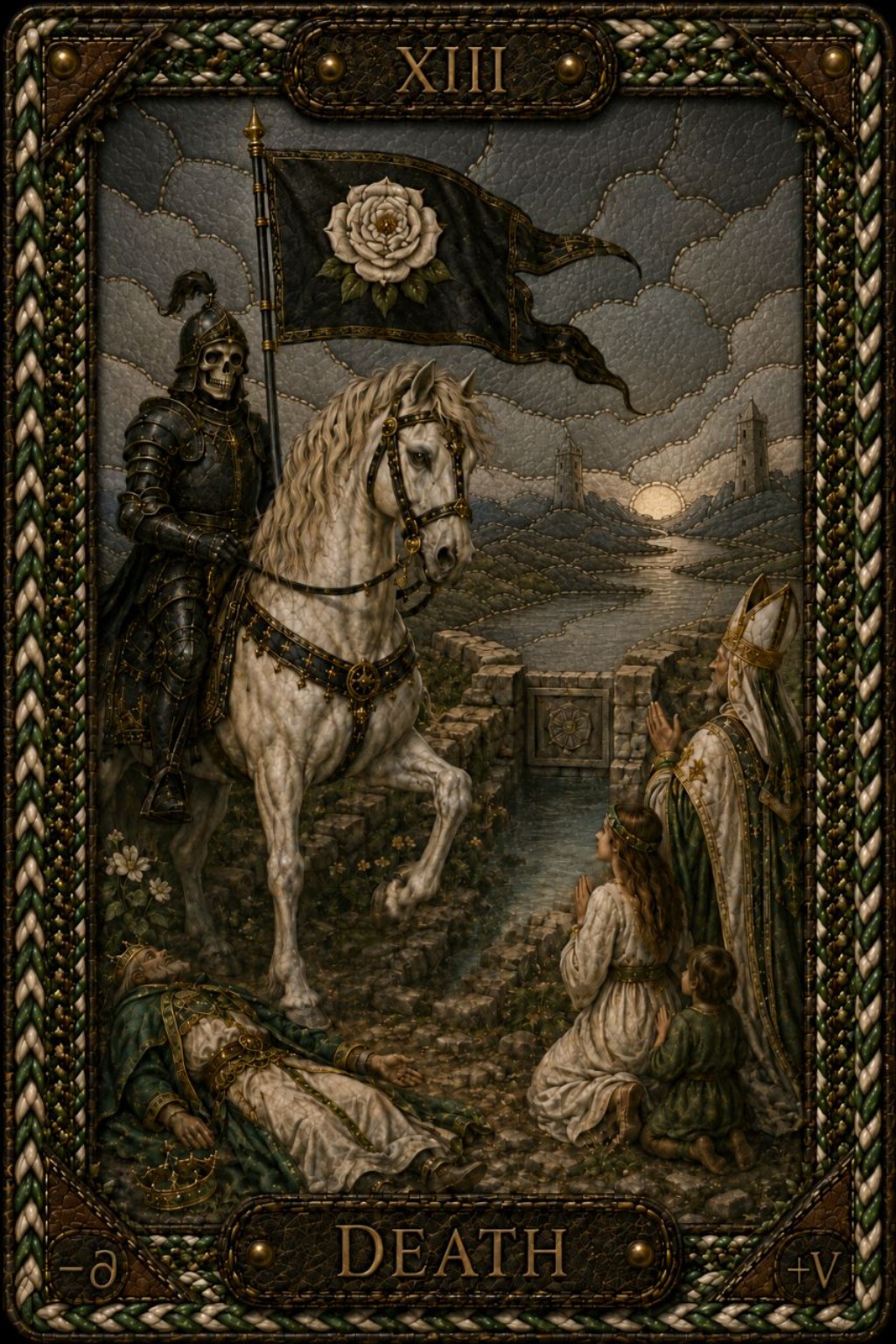
After a club closes, some participants establish a new venue. They move the instruments, change the name and celebrate independence. Yet the premises and all the money belong to the former director, who can end his support any day.
The outward break has not yet ended the old dependency. It may even have strengthened it if participants lost earlier agreements without obtaining new ones. The question of their next life therefore requires looking at what now holds it in place and who can stop it with one decision.
Later, the venue obtains its own lease and funds controlled by its participants. Other obligations and limits arise; complete independence from everything does not exist. But the former director no longer determines alone whether the next gathering can happen.
Death beside Pluto does not promise that every ending automatically creates freedom. Mars concerns the specific actions of moving; Neptune concerns what continues from the club's life. Pluto helps trace the change in dependencies after the break, including those that initially went unnoticed.
Pluto in Sagittarius

A study group can choose lesson topics, yet admission to the next stage depends entirely on one mentor. His requirements change, and questioning them is not customary. Participants feel they are freely shaping their path until they disagree with the sole person who grants passage onwards.
Then requirements known in advance, several assessors and an actual opportunity to review a disputed decision are introduced. The path does not become easy, but a different arrangement now determines who can move forward. The mentor's personal favour alone is no longer enough either to admit or to reject someone.
Temperance helps us consider a sequence of steps. Jupiter asks which paths are available. Saturn asks what counts as sufficient preparation at a stage. Pluto concerns the change in who establishes the requirements and gives them force.
The new arrangement may enlarge participants' freedom, or merely replace one opaque judge with several. What counts is therefore not the job titles in a new document, but the possibilities people actually have when their views differ from those of their leaders.
Pluto in Capricorn

Every department in an organisation carries out its instructions properly, but any change requires the director's signature. While she is away, nobody can move a meeting, replace a broken object or answer an unusual request. The parts work, yet the whole repeatedly waits for one permission.
After reorganisation, specified decisions pass to departments, disputed cases to joint consideration, while the director retains a named range of matters. The change becomes real in access, money and decisions actually made. Work now depends differently on its parts and its centre.
The Devil helps us see the ties that quietly kept everyone in one place. Reorganisation need not mean complete decentralisation. Sometimes separate areas instead pass certain decisions to a common centre because otherwise they cannot sustain their shared work. Both movements require their consequences to be examined.
A solar conception of the new arrangement and Saturnian clarity about authority matter, but do not yet prove that authority can be exercised. If the director still cancels any decision with a phone call, the autonomy on the diagram remains a promise. Pluto calls for attention to the arrangement that actually operates.
Pluto in Aquarius

A library network manages a common events list. Initially, one administrator can remove any venue without explanation, after which its announcements no longer reach readers. The libraries are formally independent, but their shared access to an audience has one gatekeeper.
Participants then gain an actual way to challenge removal, appoint several responsible people and retain the ability to announce gatherings through independent channels. The administrator still does necessary work but no longer determines each venue's existence within the network alone.
The Star helps us see many independent points connected. Numbers alone do not guarantee distributed power. Thousands of participants may depend on a single switch. A small circle may arrange a right of review so that one opinion does not become the last word for all.
Uranus helps compare different ways of participating. Jupiter helps assess reach. Pluto concerns changes in the conditions that allow inclusion, exclusion and review of shared decisions. A new communications technology does not replace this question: we need to see who actually holds the switch.
Pluto in Pisces

One relative keeps the family archive. He shows only selected letters and permits quotation only from the version of events he approves. Others may remember differently, but they have no access to evidence against which to compare their memories.
Later, agreed copies become available to several participants, along with an arrangement for handling private material. One custodian no longer determines alone what the whole family may know about its past. Opening access does not mean every personal letter must immediately be displayed to the entire world.
The Moon, as the card of Pisces, recalls partial visibility. Neptune asks what survives in the story passed on. Mercury asks how accurately it is understood. Pluto lets us see the conditions on which the very possibility of consulting a source and offering another version depends.
The reorganisation does not make all versions equally well supported. Evidence still needs checking. But the former monopoly on access no longer predetermines which account can be heard at all. Sometimes power over the past is revealed in who opens the cupboard containing the letters.
A change revealed by the next decision
Returning to the workshop with its new sign, it is useful to ask about more than the first celebratory meeting. What happens when participants disagree with the coordinator? Who can open the room, stop an expense, demand an explanation or propose another arrangement?
It is often the next difficult case that reveals whether dependency has changed. If every new right vanishes at the former manager's first objection, words have run ahead of reality. If a different arrangement holds through disagreement, the change already has a foothold in life.
This is not necessarily a story of freedom from all obligations. People continue to depend on materials, premises, one another's good faith and accepted decisions. A particular arrangement of these ties changes. It can be assessed through its consequences, its fairness and the life it now allows people to sustain.
Marina's musical evening may look almost the same to a listener. The same room, the same piano, a familiar melody. But the programme can no longer be cancelled at a donor's single whim. An outwardly quiet change has touched the foundation of many future evenings.
Pluto in this reading helps us see such foundations. Not every storm changes them. Nor does every deep change arrive with a storm.
The author's model and Marina's original story appear in Pavel Medvedev's book Where Astrology Came From (Russian edition). The new episodes here continue her story as imagined examples.